 RigMining
Coins
Kaspa (KAS) Mining Explained: kHeavyHash, BlockDAG and What to Check
Kaspa is a proof-of-work blockDAG that uses the kHeavyHash algorithm. See how it works, what a KAS ASIC does and what to check before you buy a miner.
What Kaspa is
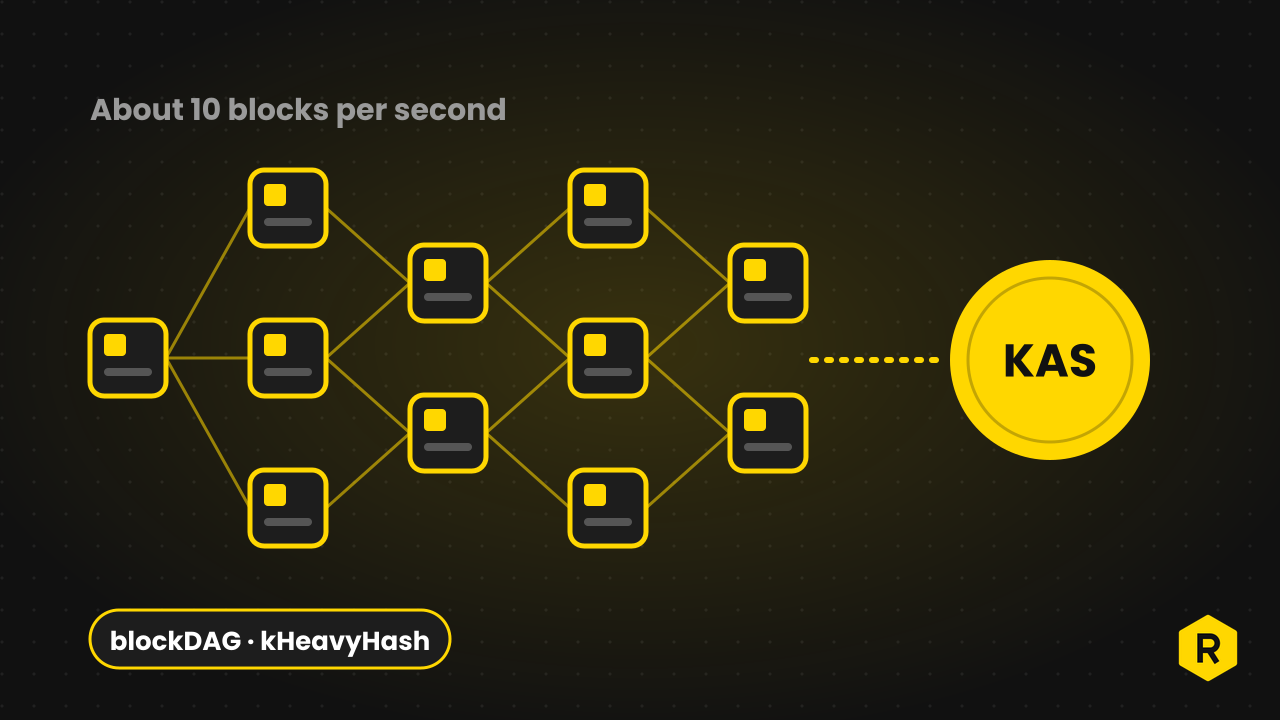
Kaspa (KAS) is a proof-of-work cryptocurrency. Like Bitcoin, it is secured by miners who spend computing power, and the first miner to find a valid result earns a reward. The Kaspa project describes the network as a proof-of-work blockDAG and says it runs at about ten blocks per second, with no premine.
The Kaspa Foundation’s fact sheet says the network launched fairly on 7 November 2021. Everyone who wanted to take part could mine from the first block, and no coins were handed out in advance.
What “blockDAG” means
Bitcoin builds one single chain of blocks. If two miners find a block at almost the same moment, one of them is thrown away.
A blockDAG (a “directed acyclic graph” of blocks) keeps blocks that are found at the same time instead of discarding them. A rule called GHOSTDAG, which the Kaspa Foundation names as the protocol it uses, puts those blocks into one agreed order. The result is a network that produces many blocks every second and still arrives at a single history.
For a miner this changes very little in daily life. You point your machine at a pool and it works. The difference is in how fast the network confirms things.
The algorithm: kHeavyHash
Every proof-of-work coin uses an algorithm, and Kaspa’s is kHeavyHash. An ASIC built for kHeavyHash can only mine coins that use kHeavyHash. A Bitcoin (SHA-256) machine cannot mine Kaspa, and a Kaspa machine cannot mine Bitcoin. Our guide to which coins an ASIC can mine explains this in more detail.
Kaspa machines are listed in GH/s or TH/s, and their numbers cannot be compared with a Bitcoin machine’s, because the two use different calculations. Read the unit on the spec sheet before you compare two Kaspa machines. See how to read an ASIC spec sheet.
How the reward works
The Kaspa Foundation’s fact sheet gives the maximum supply as about 28.7 billion KAS. The reward for each block shrinks over time. ViaBTC, a mining pool that supports Kaspa, writes (citing the project’s website) that the reward falls by a small step every month, which adds up to a halving each year. That is far more often than Bitcoin’s halving every four years.
What this means for you: the amount of KAS a machine earns tends to fall over time even when your hashrate stays the same. A price rise can make up for it, but no one can promise that. Plan around the reward you see today, not around the price you hope for.
What the project says is coming
The Kaspa Foundation’s fact sheet lists an upgrade called DAGKnight as upcoming. Upgrades of this kind can change how the network works, so read the project’s own announcements before you buy. Check whether an upgrade changes the mining algorithm. If it does, existing ASICs could be affected.
What to check before you buy a Kaspa miner
- The algorithm. The listing should say kHeavyHash.
- Hashrate and unit. Compare GH/s with GH/s and TH/s with TH/s.
- Power draw and efficiency. A more efficient machine keeps more of what it earns after electricity.
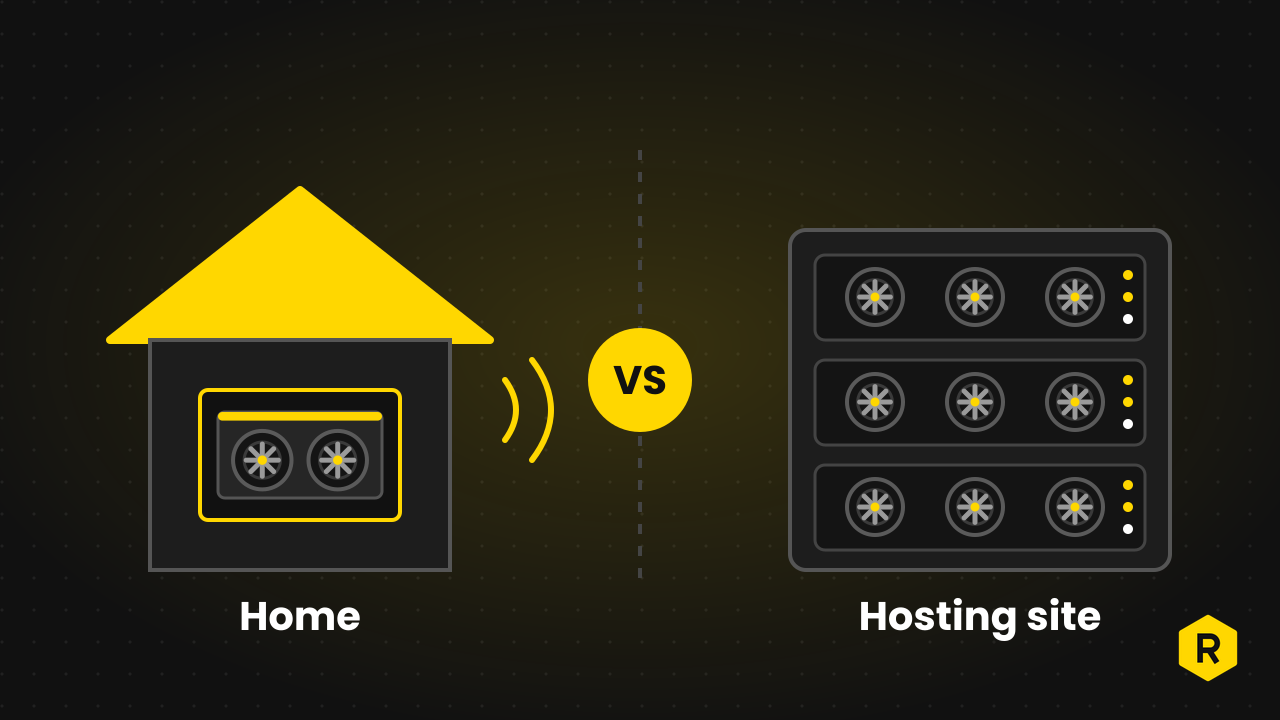
- Cooling. Air-cooled and liquid-cooled machines need different sites. A hosting site tells you which it supports.
- A pool that supports KAS. Read the pool’s payout method and fee. Our guide to pool payouts explains the common types.
- Your own numbers. Run the calculator with your electricity price. Treat the result as an estimate and not as a promise.
ViaBTC’s article also points out that Kaspa’s entry-level machines cost less than many Bitcoin machines. That can help a small buyer, but a cheaper machine does not automatically earn more. It only lowers the amount at risk.
Where to look on OneMiners
OneMiners lists machines by coin. The Kaspa miners collection has filters for brand, cooling, hashrate and energy efficiency. If you do not want to run a machine at home, the hosting centers page lists the sites, and the calculators page lets you test your own electricity price.
To see how a hosted order moves from payment to payout, read from order to payout. If you want a plain answer to a term you do not know, try the glossary.
Sources and further reading
Written by the OneMiners team. We sell and host mining machines, so this article links to our own pages where they are relevant, and the sources above are independent. It explains how things work and is not financial advice. Mining carries risk, and prices, rates and features change, so check oneminers.com for current details.