 RigMining
Profitability
How to Read an ASIC Miner Spec Sheet: Hashrate, Efficiency and Power
Hashrate in TH/s, power in watts, efficiency in J/TH: what each number on an ASIC miner listing means and how to compare two machines fairly.
The numbers that matter
Most ASIC miner listings show the same few figures. Learn these and you can compare almost any two machines.
| Figure | Unit | What it tells you |
|---|---|---|
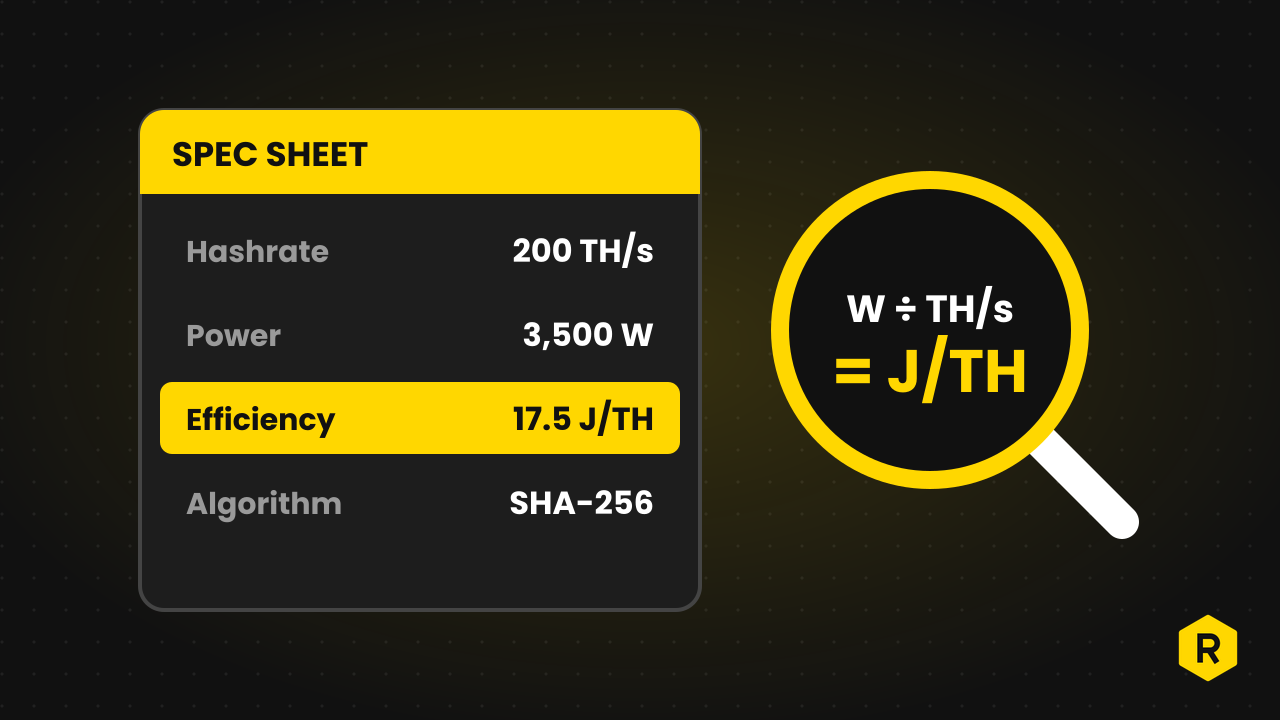
| Hashrate | TH/s (terahashes per second) | How many guesses the machine makes each second. |
| Power | W (watts) | How much electricity it draws at full load. |
| Efficiency | J/TH (joules per terahash) | How much energy it needs for each unit of work. |
| Algorithm | for example SHA-256 | Which coins it can mine. |
Hashrate units
One terahash per second (TH/s) is one trillion hashes per second. One petahash (PH/s) is 1,000 TH/s, and one exahash (EH/s) is 1,000 PH/s. Bitcoin’s whole network is measured in EH/s, while a single machine is usually in TH/s.
Efficiency: the number that keeps paying
Efficiency is power divided by hashrate:
J/TH = watts ÷ TH/s
A watt is one joule per second, so dividing watts by terahashes per second gives joules per terahash. Lower is better, because the machine needs less electricity for the same work. Electricity is the biggest cash cost for mining companies, according to Cambridge’s industry survey, and the same survey lists steadily improving hardware efficiency among its key findings.
Here is an example with made-up machines, to show the arithmetic:
| Machine A | Machine B | |
|---|---|---|
| Hashrate | 200 TH/s | 150 TH/s |
| Power | 3,500 W | 4,000 W |
| Efficiency | 17.5 J/TH | about 26.7 J/TH |
Machine B is slower and uses more power, so it is much less efficient. At the same hashrate, it would cost far more to run.
From watts to a daily power bill
Convert watts to kilowatts, then multiply by 24 hours:
kWh per day = (watts ÷ 1,000) × 24
Using an example price of $0.07 per kWh (your real rate will differ):
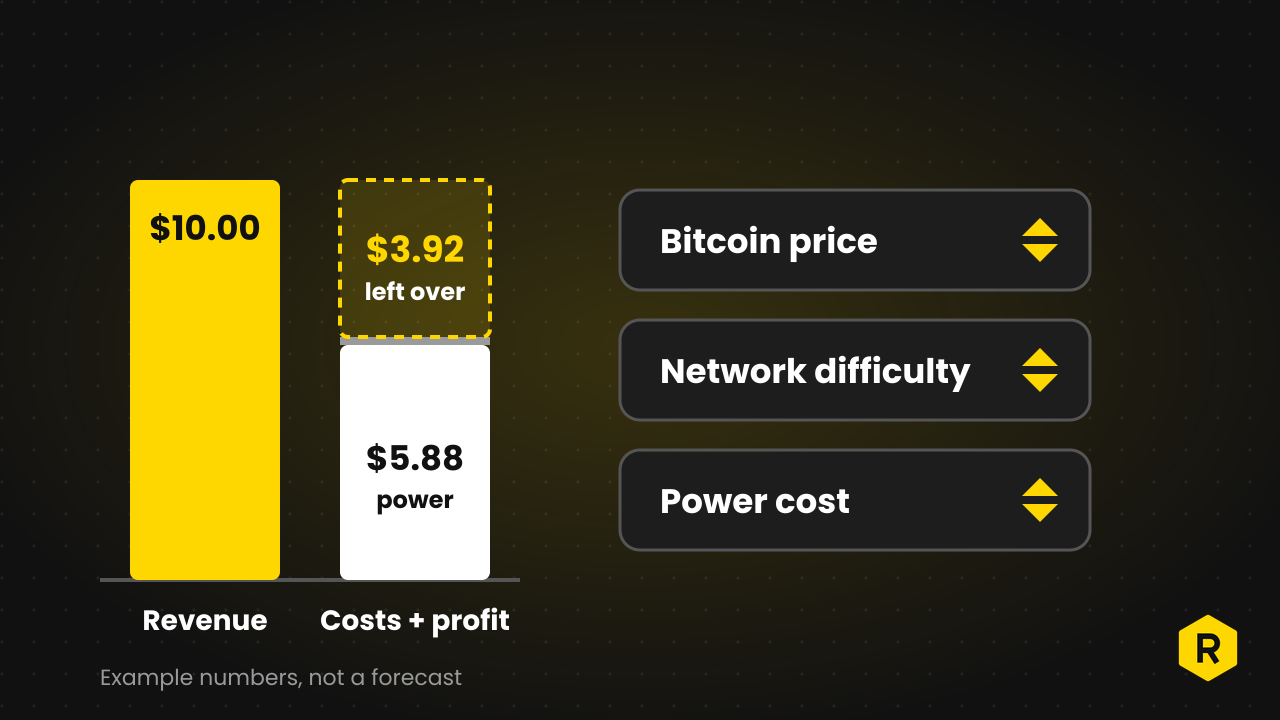
- Machine A: 3.5 kW × 24 = 84 kWh a day, about $5.88.
- Machine B: 4.0 kW × 24 = 96 kWh a day, about $6.72.
Machine A earns more and costs less to run. That is the combination to look for.
Bigger hashrate is not automatically better
A larger hashrate number does not by itself make a miner more profitable. What counts is the estimated income for that machine minus its running costs. Always put your own power price into a calculator before you decide. See what drives mining profitability.
The other lines on a listing
- Algorithm and coin. Make sure the machine mines the coin you want. See which coins an ASIC can mine.
- Cooling type. Machines are air-cooled or liquid-cooled. Liquid-cooled models need matching cooling equipment, so check that your host or site supports them before you order.
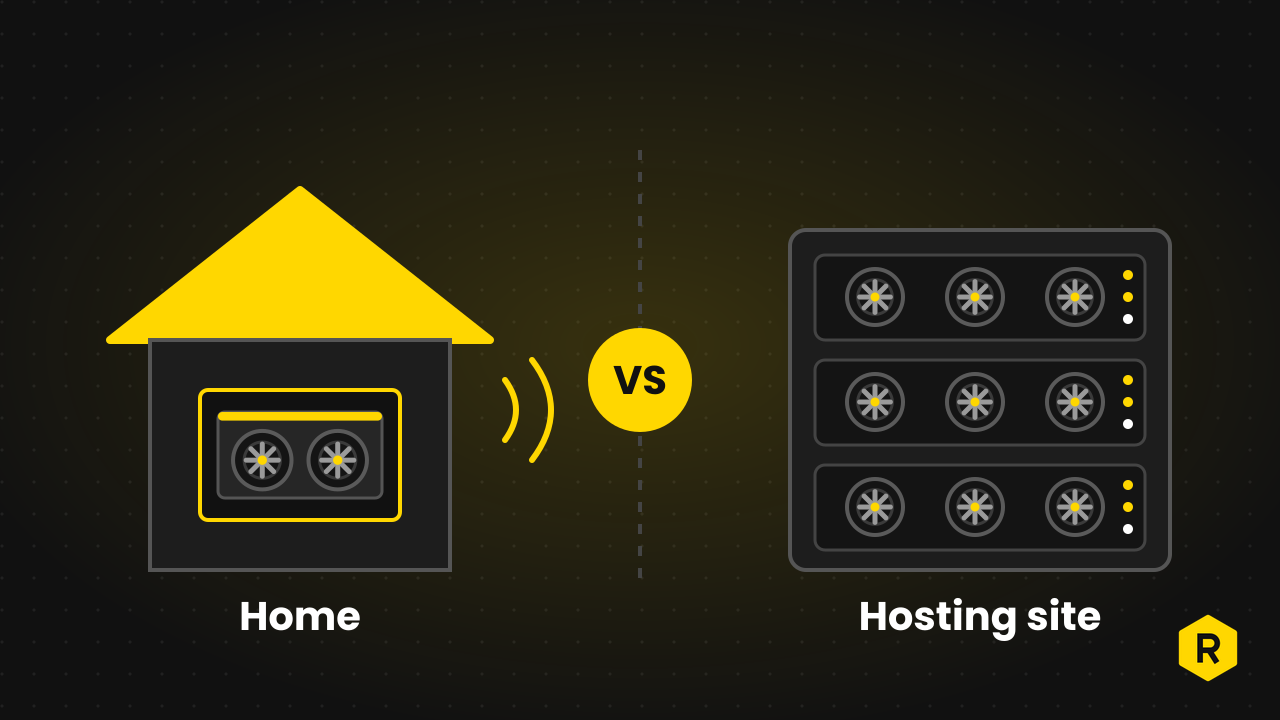
- Noise. Air-cooled machines use powerful fans and are loud. This matters at home. Read hosting vs home mining.
- Power connection. Check the voltage and current the machine needs in its manual, and whether your site can supply it.
- Warranty and shipping. Read what is covered, for how long, and who pays for shipping and duties.
Where to find the details on OneMiners
The miner profitability table shows each model’s power draw, hashrate, price and estimated daily earnings, and lets you compare them at a chosen electricity rate. Manuals, firmware and tools for each model are in the manuals and firmware library, which you can search by manufacturer, model and coin.
New to choosing a machine? Our tutorial on how to pick a Bitcoin miner walks through the website step by step.
Sources and further reading
Written by the OneMiners team. We sell and host mining machines, so this article links to our own pages where they are relevant, and the sources above are independent. It explains how things work and is not financial advice. Mining carries risk, and prices, rates and features change, so check oneminers.com for current details.