 RigMining
Mining basics
What Is Bitcoin Mining? How ASIC Miners Earn Bitcoin
Bitcoin mining explained in plain language: what miners do, why they use ASIC machines, and where the reward comes from.
The short version
Bitcoin has no bank and no central computer that keeps the books. Thousands of computers around the world share one record of who owns what. That record is called the blockchain, and it is built from pages called blocks.
Miners are the people and companies who add new blocks to the record. In return, the network pays them in new bitcoin.
What a miner actually does
A mining machine repeats four steps, many billions of times a second.
- Collect. It gathers waiting transactions into a candidate block.
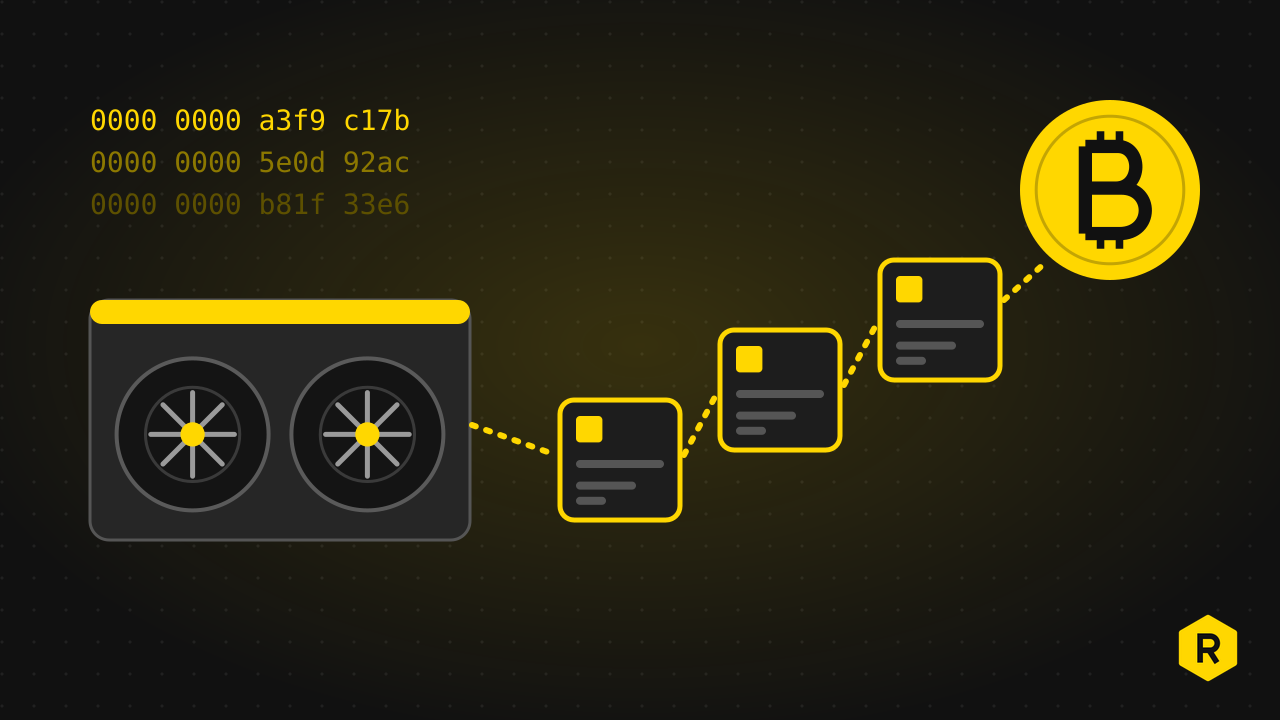
- Guess. It runs the block’s data through a hash function called SHA-256, together with a number called a nonce. The result is a long string of characters.
- Check. The network sets a target. If the result is below the target, the block is valid. If not, the machine changes the nonce and tries again.
- Share. When a machine finds a valid block, it sends it out. Other computers check it and add it to their copy of the chain.
There is no clever shortcut. Mining is guessing at huge scale, so a machine that makes more guesses per second has more chances to win. That speed is called its hashrate.
Why the puzzle gets harder
Bitcoin aims for a new block about every 10 minutes, which is about 144 blocks a day. To keep that pace, the network adjusts the target every 2,016 blocks, roughly every two weeks. If blocks came too fast, the puzzle gets harder. If they came too slowly, it gets easier.
This is why the same machine earns less when many new miners join. We explain the effect in what drives mining profitability.
Where the reward comes from
A winning miner is paid in two parts:
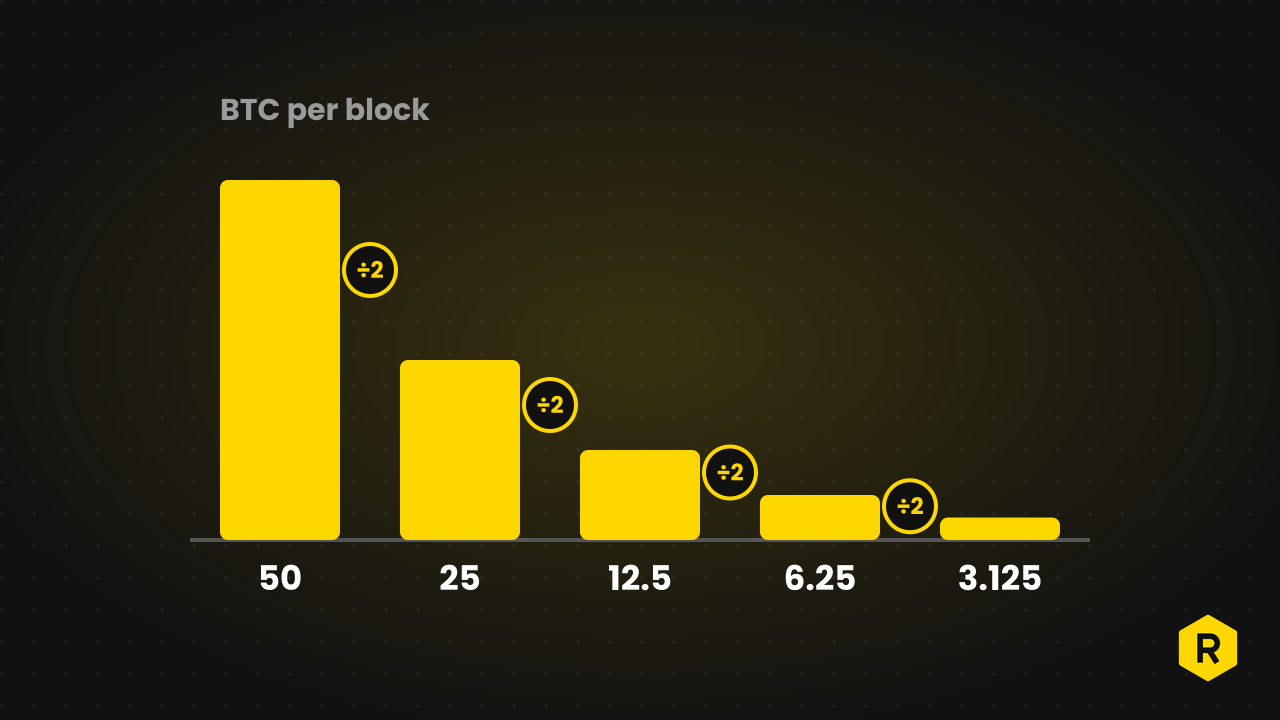
- The block subsidy. This is newly created bitcoin. Since the April 2024 halving it is 3.125 BTC per block. It is cut in half every 210,000 blocks. Read more in the halving explained.
- Transaction fees. People who send bitcoin pay fees, and the miner who builds the block collects them.
Winning a block is a matter of chance. That is why most people join a mining pool, which combines the work of many machines and shares the rewards. Pool payouts works through the common payout methods.
Why miners use ASICs
You can run SHA-256 on an ordinary computer, but very slowly. An ASIC (application-specific integrated circuit) is a chip built to do one job only. It does that job far faster and with far less electricity than a general-purpose chip.
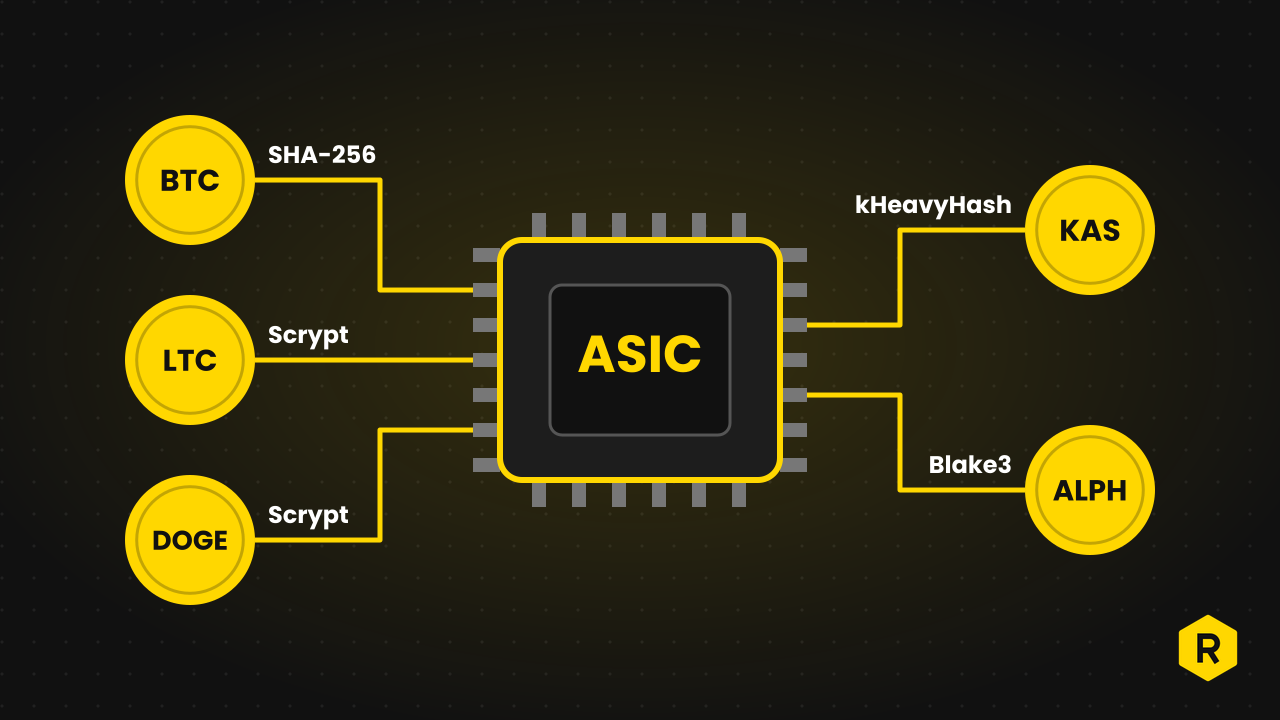
The trade-off is that an ASIC is tied to one algorithm and cannot be repurposed for another. A Bitcoin miner cannot mine every coin. See which coins an ASIC can mine.
What it costs to mine
Mining is a business of electricity and hardware. The main costs are:
- the machine itself,
- electricity, which is usually the biggest running cost,
- cooling, noise control and a suitable power connection,
- pool fees, and
- the risk that the Bitcoin price or the difficulty moves against you.
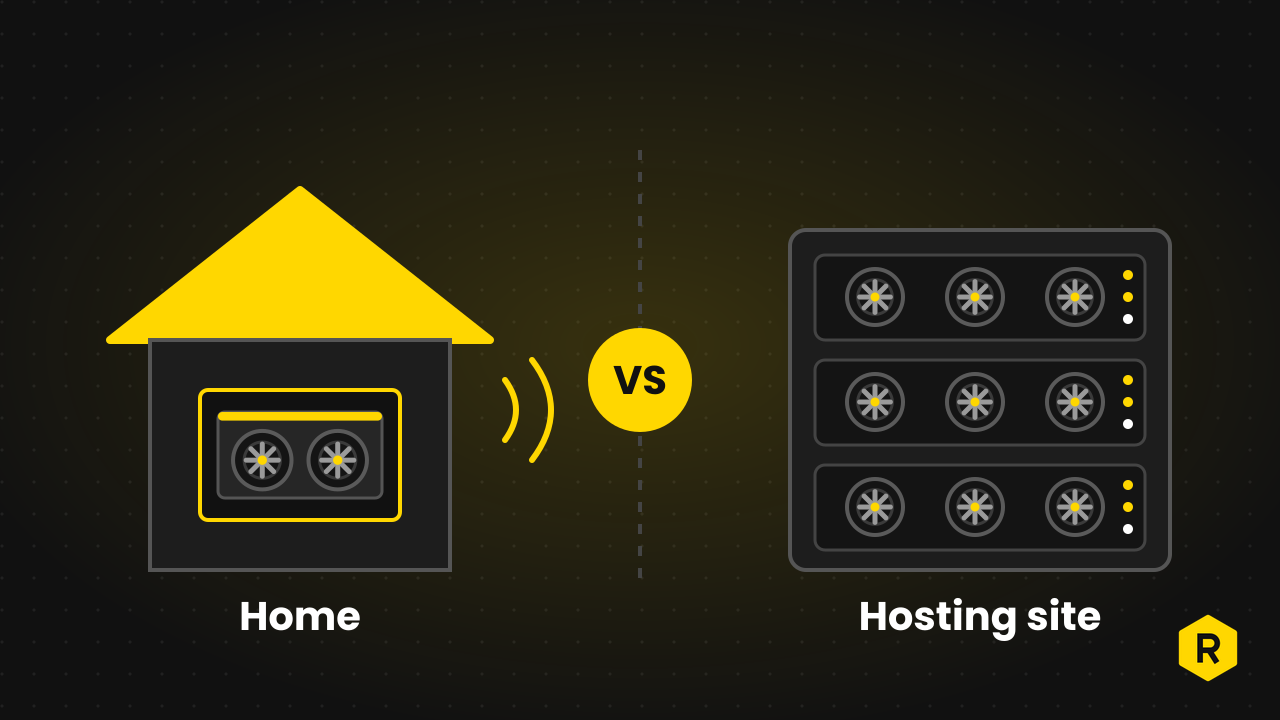
You can run machines at home or put them in a hosting site that handles power, cooling and monitoring. Hosting vs home mining compares the two.
What to remember
- Mining secures the network and earns new bitcoin for the people who do the work.
- Hashrate is the number of guesses per second. More hashrate means more chances.
- Difficulty adjusts about every two weeks, so earnings per machine shrink as more machines join.
- Earnings are an expectation, not a promise. Anyone who guarantees a return from mining is not describing how mining works.
If you want to see what a real order looks like, OneMiners shows the steps in a miner’s journey, and you can browse the Bitcoin miners it lists. For a step-by-step walkthrough, see our tutorial on how to pick a Bitcoin miner.
Sources and further reading
Written by the OneMiners team. We sell and host mining machines, so this article links to our own pages where they are relevant, and the sources above are independent. It explains how things work and is not financial advice. Mining carries risk, and prices, rates and features change, so check oneminers.com for current details.