 RigMining
Hosting
Bitcoin Mining and Energy: What the Cambridge Data Says
Where Bitcoin mining gets its power, how much it uses, and what to ask a hosting provider about its electricity, based on Cambridge's 2025 industry report.
Why this question matters
Bitcoin mining uses a lot of electricity, so people ask where it comes from. If you are choosing where to host a machine, the question is practical too. Power is the largest running cost, and where it comes from affects price, reliability and your own comfort with the choice.
The best public data we found is the Cambridge Digital Mining Industry Report. It is the most recent edition we found, published in April 2025, and its figures describe 2024.
What the report found
The Cambridge Centre for Alternative Finance surveyed 49 mining firms operating in 23 countries. Together they represent about 48% of global mining activity. The main findings:
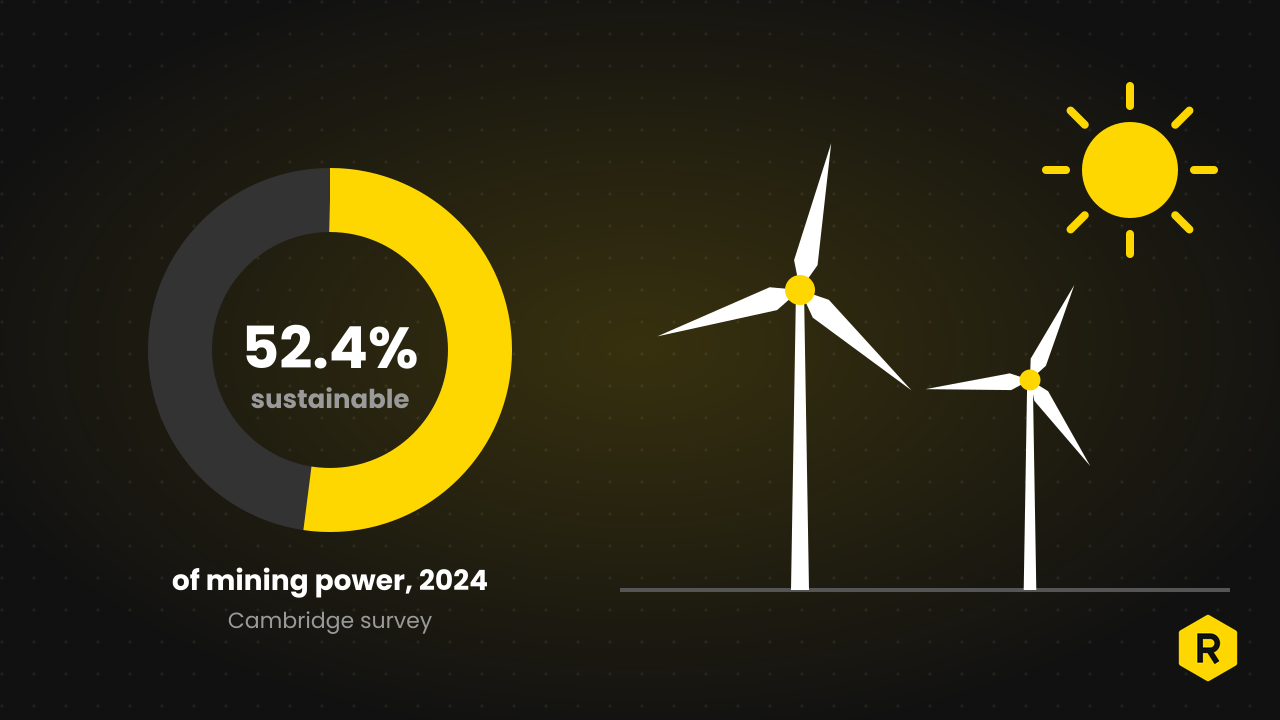
- Sustainable energy made up 52.4% of the power used, up from an estimate of 37.6% for 2022. Of that, 42.6% was renewables such as hydropower and wind, and 9.8% was nuclear.
- Natural gas was the single largest source, at 38.2%, and had replaced coal, which fell to 8.9%.
- Bitcoin’s electricity use was estimated at about 138 TWh a year, around 0.5% of global electricity consumption.
- The United States accounted for 75.4% of reported activity, followed by Canada at 7.1%.
- Electricity costs dominate miners’ cash expenses.
- Miners can act as flexible load. Firms reported curtailing 888 GWh of electricity use in 2023, which helps grid operators at times of high demand.
How to read these numbers
This is a survey, so the figures rely on what firms reported. It covers about half of global activity, and the authors extend it to the whole network by estimate. Coverage of energy sources is also uneven: reporting on where power comes from is not always verified, which makes the overall picture harder to confirm.
Other researchers have reached different conclusions about mining’s environmental impact. The honest summary is that the mix is shifting and the data is improving, but it is not perfect.
What it means if you host a machine
You do not need a report to ask your host a few direct questions:
- Where does the power come from at this site? Hydropower, wind, nuclear, gas, or the local grid mix?
- Is it a fixed or variable rate, and what happens when prices move?
- Can the host curtail your machine when the grid operator asks, and is that reflected in your uptime terms?
- What cooling is used, and does it affect which machines you can host?
- Can the host show evidence, such as a power contract or a statement, rather than just a claim?
A provider that answers these clearly is easier to trust than one that does not. See how to check a hosting company.
On OneMiners
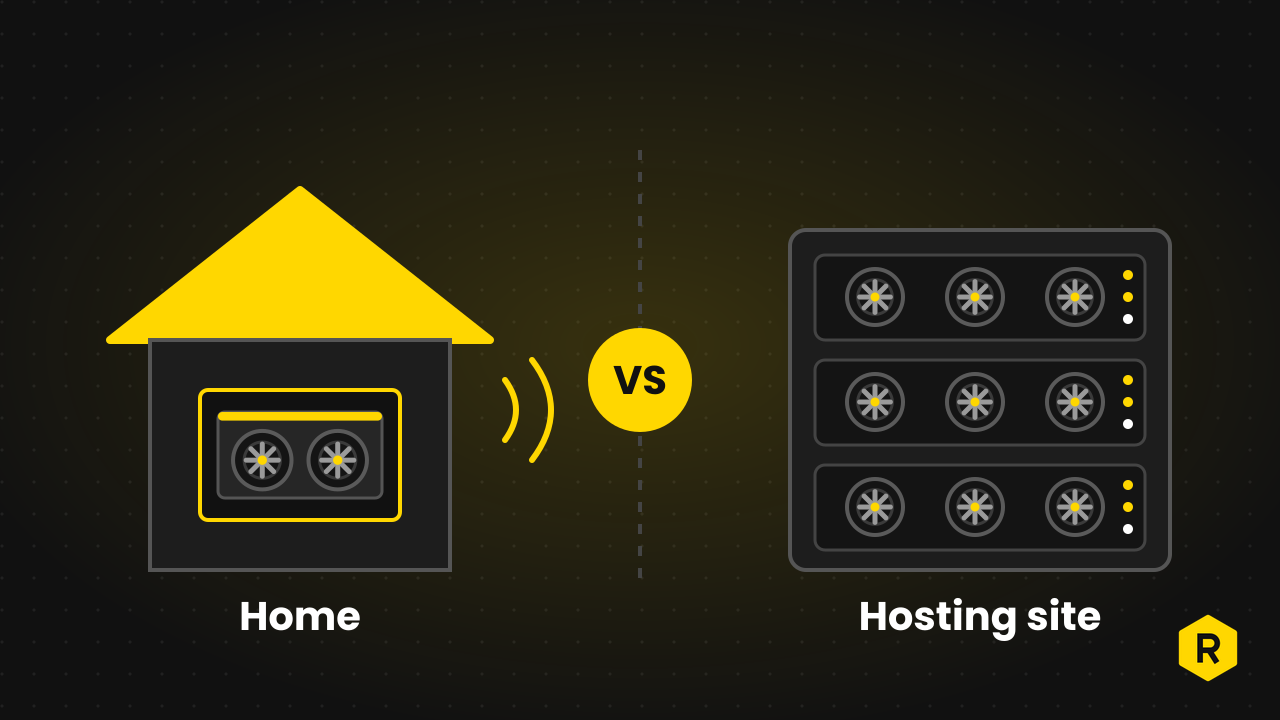
OneMiners lists its hosting locations by region, and its FAQ has a section on data centers that covers hosting locations, electricity rates, uptime and sustainability. If energy sourcing matters to you, ask about the specific site before you order. Also see our tutorial on OneMiners hosting sites compared, and hosting vs home mining for the wider comparison.
Sources and further reading
- Cambridge Judge Business School: Sustainable energy rising in Bitcoin mining
- Cambridge Centre for Alternative Finance: Digital Mining Industry Report, key findings
- The Block: Cambridge study on sustainable energy use in Bitcoin mining
- The Energy Mag: Bitcoin miners turn to renewables as the industry matures
Written by the OneMiners team. We sell and host mining machines, so this article links to our own pages where they are relevant, and the sources above are independent. It explains how things work and is not financial advice. Mining carries risk, and prices, rates and features change, so check oneminers.com for current details.